Congress created new record-keeping requirements that could burden farms, small businesses
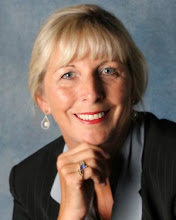
By Sara Wyant
A little-known provision tucked into the health care reform bill that President Obama signed into law this spring could have costly and confusing impacts on farmers and small business owners.
The new regulations, which kick in at the start of 2012, require any taxpayer with business income to issue 1099 forms to all vendors from whom they purchased more than $600 of goods and services that year and report on forms filed in 2013. That means supplies, parts, or any of the goods that you might purchase to run your farming operation or business.
“A laundromat that buys soap each week would now have to issue a 1099 to their supplier and the IRS at the end of the year. A landscaper who buys lawn fertilizer a couple of times a month will now be forced to issue 1099s to the companies they do business with, and no one is excluded,” lamented Sen. Mike Johanns (R-NE) in a recent speech on the Senate floor where he argued for full repeal of the new regulations.
The Patient Protection and Affordable Care Act (PPACA) provision would apply to businesses of all sizes, charities and other tax-exempt organizations, and government entities. These would include two million farming businesses, 26 million non-farm sole proprietorships, four million S corporations, two million C corporations, three million partnerships, one million charities and other tax-exempt organizations, and probably more than 100,000 federal, state, and local government entities, according to a report released by National Taxpayer Advocate Nina Olson.
The provision has nothing to do with health care, other than to help generate more tax revenue to pay for the mammoth reform package by reducing the “tax gap.” The federal government misses out on over $300 billion each year from tax underpayment, according to a report issued by the General Accountability Office in 2007. Requiring the additional 1099 paper trails are an attempt to help the Internal Revenue Service (IRS) find businesses that may not be paying their fair share of taxes.
But along with additional tax revenues, the new regulations will likely create a paperwork nightmare for farmers and small business owners and yes, even the IRS. Although the rules have not yet been finalized, Olson highlighted a number of the challenges in her report: “National Taxpayer Advocate's FY 2011 Objectives Report to Congress”.
“First, vendors will have to furnish, and businesses will have to collect, TINs (Tax Identification Numbers). If the vendor is a sole proprietor who uses his or her Social Security number (SSN) as the TIN, there could be identity theft concerns, especially if TINs essentially become public through routine printing on receipts. Alternatively, such a vendor could obtain an Employer Identification Number (EIN). If a vendor fails to furnish a correct TIN, the business is required by law to impose back-up withholding at the rate of 28 percent of the purchase price.”
“Second, businesses will now have to keep records of all purchases sorted by TIN. Under prior law, a business may have retained sufficient records to substantiate lump-sum ex-pense deductions. Under the new law, the business will have to segregate its records by vendor TIN to determine whether the $600 annual threshold is met for each vendor.
“Third, businesses will have to produce and transmit information reports, including many not previously required. For this purpose, small businesses may have to acquire new software or pay for additional accounting services, incurring additional costs. Moreover, if a business makes qualifying purchases from at least 250 vendors during the calendar year, it will be required to file Forms 1099 electronically, which may require the business to pay a per-report fee charged by an e-file service provider.
“Fourth, the IRS will face challenges making productive use of this new volume of information reports. In general, the IRS’s document-matching system (known as the Automated Underreporter (AUR) program) compares amounts shown on a taxpayer’s tax return with amounts shown on third-party information reports like Forms W-2, Wage and Tax Statement, and Forms 1099.
For example, it matches wages shown on a Form W-2 with wages reported on a tax return and interest shown on a Form 1099-INT, Interest Income, with interest reported on a tax return.Under the expanded reporting regime, however, the amounts on the information reports and the tax returns will not match under the rules for at least two reasons. First, total annual payments under $600 will not be reported by the purchaser on Form 1099 but must be reported by the vendor. While the $600 threshold existed under prior law, if a significant proportion of a vendor’s proceeds comes from small purchases, PPACA reporting would be underinclusive. Second, the goods market is subject to a high rate of returned items that result in refunds to the purchaser. If a business purchases and then returns goods, the vendor does not have any income. Yet depending on how the purchaser’s record-keeping system is set up, a Form 1099 may be filed showing the purchase (particularly if the purchase occurs in one tax year and the return occurs in the following tax year).”
At any rate,”it will be challenging for the IRS to sort these payments out,” reports Olson in her report to Congress. “In our view, it is highly likely that the IRS will improperly assess penalties that it must abate later, after great expenditure of taxpayer and IRS time and effort.”
Under a proposed regulation to streamline data collection, many business purchases made with credit or debit cards would be exempt from the new reporting requirement because they are already reported by banks and other payment processors. But even this proposed rule has come under attack from small business groups that want to pay with cash or check to avoid costly credit card fees. The IRS is accepting public comments on the new rule until Sept. 29, 2010.
Will Congress repeal?
Even before the new rules take effect, several lawmakers are trying to repeal this proposal altogether and a key Senate vote is scheduled for mid-Sept. Both Republicans and Democrats want to change the rule, but they differ in their approaches and methods of paying for them.
For example, Sen. Mike Johanns (R-NE) introduced S.3578, the Small Business Paperwork Mandate Elimination Act, which would totally repeal this provision and prevent what he describes as “a massive new paperwork requirement from being imposed on businesses.” This is a companion legislation to H.R. 5141 introduced in May be Rep. Dan Lungren (R-CA).
"This mandate forces businesses to waste staff time and resources on paperwork that even the IRS says will likely be of little value," Johanns said. "One more mandate that stifles small businesses at the same time that Washington urges them to hire workers. For businesses already struggling to emerge from a recession this would be particularly burdensome, requiring government paperwork for common, everyday purchases. It is nothing more than a government-imposed obstacle to economic growth and job creation.”
Co-sponsors include: Sen. Pat Roberts (R-KS), Sen. John Thune (R-SD), Sen. Christopher Bond (R-MO), Sen. Tom Coburn (R-OK), Sen James Inhofe (R-OK), Sen. Kay Bailey Hutchinson (R-TX), Sen. John Cornyn (R-TX), Sen. Mike Enzi (R-WY), Sen. John Barrasso (R-WY), Sen. Mike Crapo (R-ID),Sen. James Risch (R-ID), Saxby Chambliss (R-GA), Sen. Johny Isakson (R-GA), Sen. Richard Burr (R-NC), Sen. Lamar Alexander (R-TN), Sen. John McCain (R-AZ),Sen. Lindsey Graham (R-SC), Sen. Richard Lugar (R-IN), Sen. Lisa Murkowski (R-AR), Sen. John Ensign (R-NV), Sen. David Vitter (R-LA), Sen. George Voinovich (R-OH), and Sen. Scott Brown (R-MA). The lone Democrat to sign on this far is the chairman of the Senate Agriculture Committee: Sen. Blanche Lincoln (D-AR).
To pay for the change, Johanns lowers the affordability exemption for the new individual mandate from 8 percent to 5 percent, making fewer people subject to the individual health insurance mandate. The amendment also proposes that a $15 billion fund for wellness programs not be funded until 2018.
Sen. Bill Nelson (D-FL) plans to offer another amendment that would not repeal the record-keeping measure but would change the reporting threshold to from $600 to $5,000. His alternative is paid for by changing Section 199 of the tax code, which allows the nation’s largest oil companies to deduct six percent of their income from oil and gas production from their tax liability, effective Dec. 31, 2010.
Some of the nation’s largest small business groups and the American Farm Bureau Federation are lobbying for full repeal.
“The only option to address this widely-agreed upon onerous 1099 provision on small businesses is full repeal,” emphasized Susan Eckerly, senior vice president at the National Federation of Independent Business in a statement. “Congress needs to stop speaking out of both sides of their mouth. If they are truly interested in helping small businesses – whatever their size – they will pass legislation that fully repeals this burdensome new requirement.”
#30
Tuesday, August 10, 2010


Wednesday, June 16, 2010
Dairy producers lead the drive for major changes in the 2012 Farm Bill
Will other livestock groups join in?
By Sara Wyant
“Tough times never last, but tough people do.”
That quote, from Minister Robert Schuller, describes plenty of farmers, but is especially applicable to the dairy men and women who have been at the mercy of extremely volatile milk and feed grain markets for the last three years. Decades-old federal dairy policies did little to stop the economic “bleeding.”
Out of those difficult times grew some creative thinking about the type of safety net that dairy producers need going forward. After working more than a year with fellow dairymen, staff and economists, the National Milk Producers Federation (NMPF) rolled out their “wish list” for future federal dairy policy last week, dubbed “Foundation for the Future.”
“Producers, like me, agree that the more than 70-year-old safety net programs need revamping,” emphasized Nebraska dairy farmer and NMPF board member Doug Nuttelman during a Senate Agriculture Committee hearing last fall while the group was developing their plan. “It needs to be made more relevant for the future to avoid the conditions we are now experiencing.”
In 2007, milk prices spiked over $19/cwt. and guess what? Dairymen expanded production, only to watch milk prices respond to the oversupply and drop closer to $11/cwt last year. In what seemed like a perfect storm, the price of feed grains skyrocketed during the same time period, squeezing margins and driving many out of business.
“It’s clear we need a new safety net that focuses on margins, not just milk prices,” said NMPF’s CEO Jerry Kozak. “It’s also clear we need a system that sends timely, unmistakable signals to farmers that less milk is needed during periods of relative imbalance. The Foundation for the Future addresses both of those key issues, and it does so in a fiscally responsible, politically‐realistic fashion.”
It’s complicated
For those of you who think U.S. dairy policy is already complicated, this new proposal won’t change your perspective. In fact, it may make it worse.
The Federation’s proposal to revamp the federal safety net involves several components, including the creation of an insurance program tied to the margin between the national average cost of feed, and the national average milk price. In a huge philosophical shift, the program protects margins rather than milk prices.
Conceptually, it is similar to a program currently offered in most states by USDA’s Risk Management Agency, Livestock Gross Margin (LGM), for dairy, swine and cattle. The LGM Dairy program provides protection to dairy producers when feed costs rise or milk prices drop. But this program has failed to attract much interest, with only 474 producers enrolling in 2010, and was rejected by NMPF as a workable solution.
NMPF’s plan would use different benchmarks and be administered by your local Farm Service Agency (FSA) offices, rather than private insurance agents.
After farmers choose to enroll in the base level of the Dairy Producer Margin Protection Program at no cost to them, they would receive indemnity payments during periods when their margins are tight. In addition, farmers would have the option of purchasing supplemental coverage to protect a higher margin level between feed costs and milk prices, up to 90 percent.
No annual payments
In a conference call with reporters last week, Kozak said payments will kick in only when farmers face serious financial peril. "It's not intended to give a payment out every year, and it's not intended to give a payment when it's not needed," he explained.
The dairymen don't want payment limits, which is understandable, but perhaps not realistic. Crop farmers have been unable to avoid them for years.
The insurance program would pay farmers when the difference between milk prices and feed costs falls below $6 per 100 pounds of milk. Dairy farmers would establish a "base" level of milk production which includes annual production over the past three years. Milk production beyond that level would not qualify for insurance payments.
Another key element of the Foundation for the Future will be a Dairy Market Stabilization Program that sends a signal to producers that a small percentage of additional milk production may impact their margins. This program would encourage producers to lower their milk marketings at appropriate times.
This proposal also includes other measures, such as expanding dairy exports, ending the current federal dairy price support program and the Milk Income Loss Contract program, which pays smaller and mid-size farmers when milk prices fall below a federal target of $16.94 per cwt. Major revisions to the federal milk marketing orders are also part of this comprehensive policy overhaul.
Other parts of the dairy industry are advocating a much stronger supply management program in the next farm bill, but NMPF sources suggested that, if this new proposal is allowed to work, supply management terms might be unnecessary.
That may be true from an economic standpoint, but politically, it will be tough to embrace this large package of changes without building political support from large and small dairy producers, ranging from Vermont to California. And there will be plenty of questions from the cowboys and the pork producers, wondering why one part of the four-legged lobby gets margin protection, while they don’t.
Clearly the dairymen who developed the policy have learned from their tough times and are willing to embrace a much bigger vision for the future. Whether or not politicians will also embrace this “tough love,” remains to be seen.
For more information, go to: Agriculture News, Farm Policy, and Rural Policy
#30
By Sara Wyant
“Tough times never last, but tough people do.”
That quote, from Minister Robert Schuller, describes plenty of farmers, but is especially applicable to the dairy men and women who have been at the mercy of extremely volatile milk and feed grain markets for the last three years. Decades-old federal dairy policies did little to stop the economic “bleeding.”
Out of those difficult times grew some creative thinking about the type of safety net that dairy producers need going forward. After working more than a year with fellow dairymen, staff and economists, the National Milk Producers Federation (NMPF) rolled out their “wish list” for future federal dairy policy last week, dubbed “Foundation for the Future.”
“Producers, like me, agree that the more than 70-year-old safety net programs need revamping,” emphasized Nebraska dairy farmer and NMPF board member Doug Nuttelman during a Senate Agriculture Committee hearing last fall while the group was developing their plan. “It needs to be made more relevant for the future to avoid the conditions we are now experiencing.”
In 2007, milk prices spiked over $19/cwt. and guess what? Dairymen expanded production, only to watch milk prices respond to the oversupply and drop closer to $11/cwt last year. In what seemed like a perfect storm, the price of feed grains skyrocketed during the same time period, squeezing margins and driving many out of business.
“It’s clear we need a new safety net that focuses on margins, not just milk prices,” said NMPF’s CEO Jerry Kozak. “It’s also clear we need a system that sends timely, unmistakable signals to farmers that less milk is needed during periods of relative imbalance. The Foundation for the Future addresses both of those key issues, and it does so in a fiscally responsible, politically‐realistic fashion.”
It’s complicated
For those of you who think U.S. dairy policy is already complicated, this new proposal won’t change your perspective. In fact, it may make it worse.
The Federation’s proposal to revamp the federal safety net involves several components, including the creation of an insurance program tied to the margin between the national average cost of feed, and the national average milk price. In a huge philosophical shift, the program protects margins rather than milk prices.
Conceptually, it is similar to a program currently offered in most states by USDA’s Risk Management Agency, Livestock Gross Margin (LGM), for dairy, swine and cattle. The LGM Dairy program provides protection to dairy producers when feed costs rise or milk prices drop. But this program has failed to attract much interest, with only 474 producers enrolling in 2010, and was rejected by NMPF as a workable solution.
NMPF’s plan would use different benchmarks and be administered by your local Farm Service Agency (FSA) offices, rather than private insurance agents.
After farmers choose to enroll in the base level of the Dairy Producer Margin Protection Program at no cost to them, they would receive indemnity payments during periods when their margins are tight. In addition, farmers would have the option of purchasing supplemental coverage to protect a higher margin level between feed costs and milk prices, up to 90 percent.
No annual payments
In a conference call with reporters last week, Kozak said payments will kick in only when farmers face serious financial peril. "It's not intended to give a payment out every year, and it's not intended to give a payment when it's not needed," he explained.
The dairymen don't want payment limits, which is understandable, but perhaps not realistic. Crop farmers have been unable to avoid them for years.
The insurance program would pay farmers when the difference between milk prices and feed costs falls below $6 per 100 pounds of milk. Dairy farmers would establish a "base" level of milk production which includes annual production over the past three years. Milk production beyond that level would not qualify for insurance payments.
Another key element of the Foundation for the Future will be a Dairy Market Stabilization Program that sends a signal to producers that a small percentage of additional milk production may impact their margins. This program would encourage producers to lower their milk marketings at appropriate times.
This proposal also includes other measures, such as expanding dairy exports, ending the current federal dairy price support program and the Milk Income Loss Contract program, which pays smaller and mid-size farmers when milk prices fall below a federal target of $16.94 per cwt. Major revisions to the federal milk marketing orders are also part of this comprehensive policy overhaul.
Other parts of the dairy industry are advocating a much stronger supply management program in the next farm bill, but NMPF sources suggested that, if this new proposal is allowed to work, supply management terms might be unnecessary.
That may be true from an economic standpoint, but politically, it will be tough to embrace this large package of changes without building political support from large and small dairy producers, ranging from Vermont to California. And there will be plenty of questions from the cowboys and the pork producers, wondering why one part of the four-legged lobby gets margin protection, while they don’t.
Clearly the dairymen who developed the policy have learned from their tough times and are willing to embrace a much bigger vision for the future. Whether or not politicians will also embrace this “tough love,” remains to be seen.
For more information, go to: Agriculture News, Farm Policy, and Rural Policy
#30
Wednesday, March 10, 2010
Vilsack and Holder headline competition workshops
Washington, March 10 – Agriculture Secretary Tom Vilsack and U.S. Attorney General
Eric Holder will participate in the first joint USDA/Justice Department workshop on
agriculture competition issues Friday in Ankeny, Iowa. Attorney General Holder and
Secretary Vilsack will deliver opening remarks for the workshop at 9:30 A.M. CST and
participate in a roundtable discussion at 9:45 A.M. CST. Following the roundtable
discussion, Vilsack and Holder will hold a press conference at 11:00 A.M. CST.
This initial all-day workshop to gather public input is part of a planned series of
workshops across the country designed “to explore competition and regulatory issues in the agriculture industry.” The workshop will be held at the FFA Enrichment Center at Des Moines Area Community College (DMACC) in Ankeny.
The workshops, announced by Holder and Vilsack last August, are the first joint
USDA/Justice Department workshops ever to be held to discuss competition and
regulatory issues in the agriculture industry. The goals of the workshops are “to promote dialogue among interested parties and foster learning with respect to the appropriate legal and economic analyses of these issues, as well as to listen to and learn from parties with experience in the agriculture sector.” Attendance at the workshops is free and open to the public. The general public and media interested in attending the initial workshop should register at https://go.dmacc.edu/ffa/agworkshop
Holder, Vilsack and Assistant Attorney General for the Justice Department’s Antitrust
Division Christine Varney will participate in the workshop and will be joined by Iowa Lt. Gov. Patty Judge, Iowa Attorney General Tom Miller and Iowa Agriculture Secretary Bill Northey. They will participate in a roundtable discussion with presentations on current issues affecting farmers. Testimony and roundtable discussion by a panel of farmers will follow. The workshop will also feature two panels focusing on the competitive dynamics in the seed industry and trends in contracting, transparency and buyer power. The first day of the workshops will end with an “enforcer roundtable” and public testimony.
The workshop schedule:
Opening Remarks (9:30 a.m. CST - 9:45 a.m. CST)
Tom Vilsack, Secretary of Agriculture, U.S. Department of Agriculture
Eric Holder, Attorney General, U.S. Department of Justice
Roundtable Discussion and Presentation of Issues (9:45 a.m. CST - 10:45 a.m. CST)
Tom Vilsack, Secretary of Agriculture, U.S. Department of Agriculture
Eric Holder, Attorney General, U.S. Department of Justice
Christine Varney, Assistant Attorney General for Antitrust, U.S. Department of Justice
Patty Judge, Lt. Governor, State of Iowa
Tom Miller, Attorney General, State of Iowa
Bill Northey, Secretary of Agriculture, State of Iowa
Tom Harkin, Senator, U.S. Senate (tentative)
Chuck Grassley, Senator, U.S. Senate (tentative)
Leonard Boswell, Congressman, U.S. House of Representatives (tentative)
Invited:
Bruce Braley, Congressman, U.S. House of Representatives
Steve King, Congressman, U.S. House of Representatives
Tom Latham, Congressman, U.S. House of Representatives
Dave Loebsack, Congressman, U.S. House of Representatives
Farmer Testimony and Roundtable Discussion (11:15 a.m. CST - 12:15 p.m. CST)
Tom Vilsack, Secretary of Agriculture, U.S. Department of Agriculture
Christine Varney, Assistant Attorney General for Antitrust, U.S. Department of Justice
Ken Fawcett, independent crop farmer, Eastern Iowa
Jim Foster, hog producer, Montgomery City, Missouri
Pam Johnson, farmer, Floyd, Iowa
Eric Nelson, grain and cattle farmer, Moville, Iowa
Todd Wiley, hog producer, Walker, Iowa
Eddie Wise, hog and produce farmer, Whitakers, North Carolina
Seed Competitive Dynamics Panel (1:15 p.m. CST - 2:15 p.m. CST)
Moderator:
James MacDonald, Chief, Agricultural Structure and Productivity Branch, Economic
Research Service, U.S. Department of Agriculture
Panelists:
Ray Gaesser, Soybean and Corn Farmer, Corning, Iowa; Vice President, American
Soybean Association; Former President, Iowa Soybean Association
Neil E. Harl, Charles F. Curtiss Distinguished Professor in Agriculture and Emeritus
Professor of Economics, Iowa State University; Member of the Iowa Bar
Dermot Hayes, Professor of Economics and Finance, Pioneer Chair in Agribusiness, Iowa
State University
Diana Moss, Vice President & Senior Fellow, American Antitrust Institute
Jim Tobin, Vice President, Industry Affairs, Monsanto Company
Agricultural Trends Panel (2:15 p.m. CST - 3:15 p.m. CST)
Moderator:
Phil Weiser, Deputy Assistant Attorney General, U.S. Department of Justice
Panelists:
Brian Buhr, Professor and Head of Department, Applied Economics, University of
Minnesota
Rachael Goodhue, Associate Professor, Department of Agriculture and Resource
Economics, University of California, Davis
Mary Hendrickson, Extension Associate Professor of Rural Sociology, University of
Missouri
John Lawrence, Professor of Economics, Iowa State University
Chuck Wirtz, pork producer, Whittemore, Iowa
Patrick Woodall, Research Director, Food & Water Watch
Enforcer Roundtable Discussion Panel (3:30 p.m. CST - 4:30 p.m. CST)
Moderator:
Mark Tobey, Special Counsel for State Relations and Agriculture, U.S. Department of
Justice
Panelists:
Steve Bullock, Attorney General, State of Montana
Richard Cordray, Attorney General, State of Ohio
Chris Koster, Attorney General, State of Missouri
John Ferrell, Deputy Under Secretary for Marketing and Regulatory Programs, U.S.
Department of Agriculture
Stephen Obie, Director, Division of Enforcement, Commodity Futures Trading
Commission
William Stallings, Assistant Section Chief, Transportation, Energy and Agriculture
Section, Antitrust Division, U.S. Department of Justice
Public Testimony (4:30 p.m. CST - 5:30 p.m. CST)
This is an opportunity for those in the audience to make comments in an open forum.
Closing Remarks (5:30 p.m. CST)
Phil Weiser, Deputy Assistant Attorney General, U.S. Department of Justice
John Ferrell, Deputy Under Secretary for Marketing and Regulatory Programs, U.S.
Department of Agriculture
Additional updates and information will be posted on the Antitrust Division’s agriculture workshop Web site at http://www.justice.gov/atr/public/workshops/ag2010/index.htm.
While no streaming webcast will be available, transcripts will be available for review at a later date on the Antitrust Division’s Web site. Individuals seeking more information on the workshops should contact agriculturalworkshops@usdoj.gov.
Agriculture News, Farm Policy, and Rural Policy
#30
Eric Holder will participate in the first joint USDA/Justice Department workshop on
agriculture competition issues Friday in Ankeny, Iowa. Attorney General Holder and
Secretary Vilsack will deliver opening remarks for the workshop at 9:30 A.M. CST and
participate in a roundtable discussion at 9:45 A.M. CST. Following the roundtable
discussion, Vilsack and Holder will hold a press conference at 11:00 A.M. CST.
This initial all-day workshop to gather public input is part of a planned series of
workshops across the country designed “to explore competition and regulatory issues in the agriculture industry.” The workshop will be held at the FFA Enrichment Center at Des Moines Area Community College (DMACC) in Ankeny.
The workshops, announced by Holder and Vilsack last August, are the first joint
USDA/Justice Department workshops ever to be held to discuss competition and
regulatory issues in the agriculture industry. The goals of the workshops are “to promote dialogue among interested parties and foster learning with respect to the appropriate legal and economic analyses of these issues, as well as to listen to and learn from parties with experience in the agriculture sector.” Attendance at the workshops is free and open to the public. The general public and media interested in attending the initial workshop should register at https://go.dmacc.edu/ffa/agworkshop
Holder, Vilsack and Assistant Attorney General for the Justice Department’s Antitrust
Division Christine Varney will participate in the workshop and will be joined by Iowa Lt. Gov. Patty Judge, Iowa Attorney General Tom Miller and Iowa Agriculture Secretary Bill Northey. They will participate in a roundtable discussion with presentations on current issues affecting farmers. Testimony and roundtable discussion by a panel of farmers will follow. The workshop will also feature two panels focusing on the competitive dynamics in the seed industry and trends in contracting, transparency and buyer power. The first day of the workshops will end with an “enforcer roundtable” and public testimony.
The workshop schedule:
Opening Remarks (9:30 a.m. CST - 9:45 a.m. CST)
Tom Vilsack, Secretary of Agriculture, U.S. Department of Agriculture
Eric Holder, Attorney General, U.S. Department of Justice
Roundtable Discussion and Presentation of Issues (9:45 a.m. CST - 10:45 a.m. CST)
Tom Vilsack, Secretary of Agriculture, U.S. Department of Agriculture
Eric Holder, Attorney General, U.S. Department of Justice
Christine Varney, Assistant Attorney General for Antitrust, U.S. Department of Justice
Patty Judge, Lt. Governor, State of Iowa
Tom Miller, Attorney General, State of Iowa
Bill Northey, Secretary of Agriculture, State of Iowa
Tom Harkin, Senator, U.S. Senate (tentative)
Chuck Grassley, Senator, U.S. Senate (tentative)
Leonard Boswell, Congressman, U.S. House of Representatives (tentative)
Invited:
Bruce Braley, Congressman, U.S. House of Representatives
Steve King, Congressman, U.S. House of Representatives
Tom Latham, Congressman, U.S. House of Representatives
Dave Loebsack, Congressman, U.S. House of Representatives
Farmer Testimony and Roundtable Discussion (11:15 a.m. CST - 12:15 p.m. CST)
Tom Vilsack, Secretary of Agriculture, U.S. Department of Agriculture
Christine Varney, Assistant Attorney General for Antitrust, U.S. Department of Justice
Ken Fawcett, independent crop farmer, Eastern Iowa
Jim Foster, hog producer, Montgomery City, Missouri
Pam Johnson, farmer, Floyd, Iowa
Eric Nelson, grain and cattle farmer, Moville, Iowa
Todd Wiley, hog producer, Walker, Iowa
Eddie Wise, hog and produce farmer, Whitakers, North Carolina
Seed Competitive Dynamics Panel (1:15 p.m. CST - 2:15 p.m. CST)
Moderator:
James MacDonald, Chief, Agricultural Structure and Productivity Branch, Economic
Research Service, U.S. Department of Agriculture
Panelists:
Ray Gaesser, Soybean and Corn Farmer, Corning, Iowa; Vice President, American
Soybean Association; Former President, Iowa Soybean Association
Neil E. Harl, Charles F. Curtiss Distinguished Professor in Agriculture and Emeritus
Professor of Economics, Iowa State University; Member of the Iowa Bar
Dermot Hayes, Professor of Economics and Finance, Pioneer Chair in Agribusiness, Iowa
State University
Diana Moss, Vice President & Senior Fellow, American Antitrust Institute
Jim Tobin, Vice President, Industry Affairs, Monsanto Company
Agricultural Trends Panel (2:15 p.m. CST - 3:15 p.m. CST)
Moderator:
Phil Weiser, Deputy Assistant Attorney General, U.S. Department of Justice
Panelists:
Brian Buhr, Professor and Head of Department, Applied Economics, University of
Minnesota
Rachael Goodhue, Associate Professor, Department of Agriculture and Resource
Economics, University of California, Davis
Mary Hendrickson, Extension Associate Professor of Rural Sociology, University of
Missouri
John Lawrence, Professor of Economics, Iowa State University
Chuck Wirtz, pork producer, Whittemore, Iowa
Patrick Woodall, Research Director, Food & Water Watch
Enforcer Roundtable Discussion Panel (3:30 p.m. CST - 4:30 p.m. CST)
Moderator:
Mark Tobey, Special Counsel for State Relations and Agriculture, U.S. Department of
Justice
Panelists:
Steve Bullock, Attorney General, State of Montana
Richard Cordray, Attorney General, State of Ohio
Chris Koster, Attorney General, State of Missouri
John Ferrell, Deputy Under Secretary for Marketing and Regulatory Programs, U.S.
Department of Agriculture
Stephen Obie, Director, Division of Enforcement, Commodity Futures Trading
Commission
William Stallings, Assistant Section Chief, Transportation, Energy and Agriculture
Section, Antitrust Division, U.S. Department of Justice
Public Testimony (4:30 p.m. CST - 5:30 p.m. CST)
This is an opportunity for those in the audience to make comments in an open forum.
Closing Remarks (5:30 p.m. CST)
Phil Weiser, Deputy Assistant Attorney General, U.S. Department of Justice
John Ferrell, Deputy Under Secretary for Marketing and Regulatory Programs, U.S.
Department of Agriculture
Additional updates and information will be posted on the Antitrust Division’s agriculture workshop Web site at http://www.justice.gov/atr/public/workshops/ag2010/index.htm.
While no streaming webcast will be available, transcripts will be available for review at a later date on the Antitrust Division’s Web site. Individuals seeking more information on the workshops should contact agriculturalworkshops@usdoj.gov.
Agriculture News, Farm Policy, and Rural Policy
#30
Friday, February 12, 2010
What else are we missing about Deputy Merrigan?
Before Michael Pollan, and King Corn, the current Deputy Secretary was full of criticism for agriculture as we know it
When the Senate Agriculture Committee held a hearing to consider the nomination of Kathleen Merrigan to be Deputy Secretary of Agriculture, we heard most of the niceties you would expect for someone who used to be a staff member there. Her former boss, Sen. Patrick Leahy (D-VT), offered glowing words of praise, as did most other committee members. Only Sen. Saxby Chambliss (R-GA) seemed to probe a little deeper into her past support for organic agriculture, asking whether or not she could be able to represent all of agriculture if confirmed to be the number two political leader at USDA.
Sitting on the sidelines at that same hearing were folks keeping their fingers crossed, hoping and praying that no one would ask about a little known chapter that Merrigan had written as part of a book, “Visions for Agriculture,” published in 1997. In that highly inflammatory chapter, Merrigan took a stab at almost every traditional interest group in agriculture, as well as the Senate Agriculture Committee, whose members she now needed to vote for her confirmation.
In short, she would have had some explaining to do.
But no one seemed to have read that little known piece of work, and no one asked....at least until now. We published several excerpts from the piece on www.Agri-Pulse.com
Read “This is not your father’s (or your mother’s) USDA,
http://www.agri-pulse.com/DownloadLogin.asp?Name=201002102SW1.pdf (subscriber only) It’s a straight up piece, that you can read and form your own opinion.
“The future of U.S. agriculture depends on reinventing government according to three principles: regulation, diversity, and democratic decision making. These principles will help farmers by ensuring market access and environmental stewardship…….To attain my vision of U.S. agriculture, we must undergo a disruptive period of heavy-handed government reforms, followed by a true partnership between the public and private sectors,” Merrigan wrote while she was a senior analyst for the Henry A. Wallace Institute for Alternative Agriculture, a Washington, DC-based organization which promotes research and education in sustainable agriculture.
She went on to bash almost every traditional commodity and interest group that has influenced agricultural policy for the last several decades and called for major changes in cropping patterns. Hardly any ox remained ungored.
In this week’s Open Mic interview, we asked Merrigan about her focus at USDA and tried to provide a better understanding of her role. To listen, go to www.Agri-Pulse.com or to download on your PDA, click here:
http://www.agri-pulse.com/uploaded/OpenMic020810.mp3
But now, lots of folks are reading that chapter and wondering: What else should we know about the Deputy? And what else don’t we know about the new agenda at USDA?
We have asked our readers to read and react. Let us know your thoughts on how USDA is doing.
Agriculture News, Farm Policy, and Rural Policy
#30
When the Senate Agriculture Committee held a hearing to consider the nomination of Kathleen Merrigan to be Deputy Secretary of Agriculture, we heard most of the niceties you would expect for someone who used to be a staff member there. Her former boss, Sen. Patrick Leahy (D-VT), offered glowing words of praise, as did most other committee members. Only Sen. Saxby Chambliss (R-GA) seemed to probe a little deeper into her past support for organic agriculture, asking whether or not she could be able to represent all of agriculture if confirmed to be the number two political leader at USDA.
Sitting on the sidelines at that same hearing were folks keeping their fingers crossed, hoping and praying that no one would ask about a little known chapter that Merrigan had written as part of a book, “Visions for Agriculture,” published in 1997. In that highly inflammatory chapter, Merrigan took a stab at almost every traditional interest group in agriculture, as well as the Senate Agriculture Committee, whose members she now needed to vote for her confirmation.
In short, she would have had some explaining to do.
But no one seemed to have read that little known piece of work, and no one asked....at least until now. We published several excerpts from the piece on www.Agri-Pulse.com
Read “This is not your father’s (or your mother’s) USDA,
http://www.agri-pulse.com/DownloadLogin.asp?Name=201002102SW1.pdf (subscriber only) It’s a straight up piece, that you can read and form your own opinion.
“The future of U.S. agriculture depends on reinventing government according to three principles: regulation, diversity, and democratic decision making. These principles will help farmers by ensuring market access and environmental stewardship…….To attain my vision of U.S. agriculture, we must undergo a disruptive period of heavy-handed government reforms, followed by a true partnership between the public and private sectors,” Merrigan wrote while she was a senior analyst for the Henry A. Wallace Institute for Alternative Agriculture, a Washington, DC-based organization which promotes research and education in sustainable agriculture.
She went on to bash almost every traditional commodity and interest group that has influenced agricultural policy for the last several decades and called for major changes in cropping patterns. Hardly any ox remained ungored.
In this week’s Open Mic interview, we asked Merrigan about her focus at USDA and tried to provide a better understanding of her role. To listen, go to www.Agri-Pulse.com or to download on your PDA, click here:
http://www.agri-pulse.com/uploaded/OpenMic020810.mp3
But now, lots of folks are reading that chapter and wondering: What else should we know about the Deputy? And what else don’t we know about the new agenda at USDA?
We have asked our readers to read and react. Let us know your thoughts on how USDA is doing.
Agriculture News, Farm Policy, and Rural Policy
#30
Friday, January 29, 2010
President Obama signals new emphasis on trade
By Sara Wyant
Prior to President Barack Obama’s State of the Union speech this week, we asked a cross section of farm and rural residents what they would like to hear him say. One theme that came across loud and clear: the need for this administration to get busy creating jobs through an aggressive trade strategy.
“Get busy on trade!” was the advice of Kansas Farm Bureau President Steve Baccus. “That means get back to negotiating trade agreements that are USA friendly and work with the administration and Congress to quickly approve the ones waiting out there. Improving global trade will have an immediate impact on our economy.”
President Obama delivered Wednesday night, as part of his State of the Union speech:
“We need to export more of our goods. Because the more products we make and sell to other countries, the more jobs we support right here in America. So tonight, we set a new goal: We will double our exports over the next five years, an increase that will support two million jobs in America. To help meet this goal, we're launching a National Export Initiative that will help farmers and small businesses increase their exports, and reform export controls consistent with national security, he said.
“We have to seek new markets aggressively, just as our competitors are. If America sits on the sidelines while other nations sign trade deals, we will lose the chance to create jobs on our shores. But realizing those benefits also means enforcing those agreements so our trading partners play by the rules. And that's why we'll continue to shape a Doha trade agreement that opens global markets, and why we will strengthen our trade relations in Asia and with key partners like South Korea and Panama and Colombia.”
For more on the President’s speech: http://www.agri-pulse.com/uploaded/Jan2710H2.pdf
Farm groups quickly applauded the President’s focus on trade.
“As leaders of an industry dependent on exports for half its sales, we were thrilled to hear that President Obama plans to give trade a more prominent role in his administration’s economic recovery agenda,” said U.S. Wheat Associates Chair Janice Mattson, a wheat grower from Chester, MT., and National Association of Wheat Growers President Karl Scronce, a wheat grower from Klamath Falls,OR in a joint statement.
The American Farm Bureau Federation also welcomed the news:
“Expanded trade opportunities are vital to America’s farmers and ranchers, and we welcome and support the president’s call to export more of our agricultural goods. We appreciated his support for strengthening trade relations with Asia and with key partners like South Korea, Panama and Colombia. We join President Obama in his stated goal of doubling our exports over the next five years and we look forward to working with the administration on a National Export Initiative that will help farmers and small businesses increase their exports,” said AFBF President Bob Stallman in a statement.
As much as farmers and ranchers are excited about the potential for a new push on trade, the devil is in the details. And for now, there do not appear to be any.
Farm-state senators, like Iowa’s Chuck Grassley, wants action sooner rather than later.
“In his speech, the President said exports are important to job creation, and education is necessary for U.S. workers to compete worldwide,” said Sen. Chuck Grassley. “I agree with those words. Now I’m looking for action. There are two immediate ways to advance these goals. One is for the President to send Congress implementing legislation for the three pending trade agreements that have been ready to go for years. The other is to fund a training program that will help workers get the skills they need for good jobs in the United States.”
So how quickly will the Obama team act? When the New York Times asked the White House for specifics, their editors were told that the Commerce Secretary Gary Locke would provide more details in a speech next week.
For now, all we can say is…..stay tuned.
Agriculture News, Farm Policy, and Rural Policy
#30
Prior to President Barack Obama’s State of the Union speech this week, we asked a cross section of farm and rural residents what they would like to hear him say. One theme that came across loud and clear: the need for this administration to get busy creating jobs through an aggressive trade strategy.
“Get busy on trade!” was the advice of Kansas Farm Bureau President Steve Baccus. “That means get back to negotiating trade agreements that are USA friendly and work with the administration and Congress to quickly approve the ones waiting out there. Improving global trade will have an immediate impact on our economy.”
President Obama delivered Wednesday night, as part of his State of the Union speech:
“We need to export more of our goods. Because the more products we make and sell to other countries, the more jobs we support right here in America. So tonight, we set a new goal: We will double our exports over the next five years, an increase that will support two million jobs in America. To help meet this goal, we're launching a National Export Initiative that will help farmers and small businesses increase their exports, and reform export controls consistent with national security, he said.
“We have to seek new markets aggressively, just as our competitors are. If America sits on the sidelines while other nations sign trade deals, we will lose the chance to create jobs on our shores. But realizing those benefits also means enforcing those agreements so our trading partners play by the rules. And that's why we'll continue to shape a Doha trade agreement that opens global markets, and why we will strengthen our trade relations in Asia and with key partners like South Korea and Panama and Colombia.”
For more on the President’s speech: http://www.agri-pulse.com/uploaded/Jan2710H2.pdf
Farm groups quickly applauded the President’s focus on trade.
“As leaders of an industry dependent on exports for half its sales, we were thrilled to hear that President Obama plans to give trade a more prominent role in his administration’s economic recovery agenda,” said U.S. Wheat Associates Chair Janice Mattson, a wheat grower from Chester, MT., and National Association of Wheat Growers President Karl Scronce, a wheat grower from Klamath Falls,OR in a joint statement.
The American Farm Bureau Federation also welcomed the news:
“Expanded trade opportunities are vital to America’s farmers and ranchers, and we welcome and support the president’s call to export more of our agricultural goods. We appreciated his support for strengthening trade relations with Asia and with key partners like South Korea, Panama and Colombia. We join President Obama in his stated goal of doubling our exports over the next five years and we look forward to working with the administration on a National Export Initiative that will help farmers and small businesses increase their exports,” said AFBF President Bob Stallman in a statement.
As much as farmers and ranchers are excited about the potential for a new push on trade, the devil is in the details. And for now, there do not appear to be any.
Farm-state senators, like Iowa’s Chuck Grassley, wants action sooner rather than later.
“In his speech, the President said exports are important to job creation, and education is necessary for U.S. workers to compete worldwide,” said Sen. Chuck Grassley. “I agree with those words. Now I’m looking for action. There are two immediate ways to advance these goals. One is for the President to send Congress implementing legislation for the three pending trade agreements that have been ready to go for years. The other is to fund a training program that will help workers get the skills they need for good jobs in the United States.”
So how quickly will the Obama team act? When the New York Times asked the White House for specifics, their editors were told that the Commerce Secretary Gary Locke would provide more details in a speech next week.
For now, all we can say is…..stay tuned.
Agriculture News, Farm Policy, and Rural Policy
#30
Monday, January 11, 2010
Farm Bureau's Stallman Puts Activists on notice: No More Mr. Nice Guy
In a hard-hitting speech, the Texan signals that farmers and ranchers have had enough of those who want to drag agriculture back to the day of 40 acres and a mule
By Sara Wyant
The farmers and ranchers I know are fiercely independent individuals who are willing to do whatever it takes to take care of their families, their animals and their land. But that doesn’t mean they go looking for fights.
In fact, most of them face so many everyday challenges, like bone-chilling weather and tough economic conditions, that they would just like to stay out of the limelight and live in peace.
But there are a growing number of these battle-scarred men and women who have had enough of the attacks from the growing list of critics, environmental groups and even some of their own elected officials. They have had a long couple of years listening to the Michael Pollans of the world, reading incredibly biased coverage in Time magazine and watching pseudo-documentaries like Food Inc.
You can almost hear them say, “Enough Already!” They are mad as hell and they don’t want to take it any more.
American Farm Bureau President Bob Stallman captured that sentiment in his powerful opening speech during the organization’s 91st annual convention in Seattle this week. Stallman, who was elected as the national organization's 11th president in 2000, delivered the most hard-hitting speech I have ever heard him give, and for many of the 4,500 in the audience, it was his best.
It’s been a long time since we have had farm leaders inspire audiences with messages like Mary Elizabeth Lease used to deliver in the late 1800’s, when she reportedly told farmers to “raise less corn and more hell”
Some farmers still remember when the charismatic Oren Lee Staley fired up members of the National Farmers Organization in the early 1960's to fight food processors for higher prices, telling them: "American farmers have retreated as far as they can. We do not intend to retreat any further."
Clearly, there’s been a void in the number of top leaders, both from the public and private sector, who are willing to use the bully pulpit to stand up for American agriculture in more recent years. Stallman indicated that he is ready to take off the gloves and lead the fight. His audience loved it.
(See: “AFBF President calls on farmers and ranchers to unite, fight extremists” http://www.agri-pulse.com/uploaded/20100110S.pdf
It’s not that the Farm Bureau is unwilling to engage divergent interests. As Stallman stood before his convention attendees, an estimated 4,500 farmers and ranchers from all across America, he pointed out:
“As I scan this hall, I see farmers who embrace all the tools of modern agriculture. I see people who choose modern organic production…I see folks who plant conventional seed and those who use biotechnology. I see families who raise livestock in sheltered, climate-controlled conditions. I see feedlot operators. But also among our ranks here in Seattle, I see farm and ranch families who produce grass-fed beef, free-range pork and cage-free eggs.”
And AFBF is actively working with several environmental groups, such as the Environmental Defense Fund, World Wildlife Fund, and The Nature Conservancy on Field to Market: The Keystone Alliance for Sustainable Agriculture.
But enough of that “Mr. Nice Guy” stuff.
“A line must be drawn between our polite and respectful engagement with consumers and how we must aggressively respond to extremists who want to drag agriculture back to the day of 40 acres and a mule,” said Stallman. “The time has come to face our opponents with a new attitude. The days of their elitist power grabs are over.”
Consider yourself warned.
Agriculture News, Farm Policy, and Rural Policy
#30
By Sara Wyant
The farmers and ranchers I know are fiercely independent individuals who are willing to do whatever it takes to take care of their families, their animals and their land. But that doesn’t mean they go looking for fights.
In fact, most of them face so many everyday challenges, like bone-chilling weather and tough economic conditions, that they would just like to stay out of the limelight and live in peace.
But there are a growing number of these battle-scarred men and women who have had enough of the attacks from the growing list of critics, environmental groups and even some of their own elected officials. They have had a long couple of years listening to the Michael Pollans of the world, reading incredibly biased coverage in Time magazine and watching pseudo-documentaries like Food Inc.
You can almost hear them say, “Enough Already!” They are mad as hell and they don’t want to take it any more.
American Farm Bureau President Bob Stallman captured that sentiment in his powerful opening speech during the organization’s 91st annual convention in Seattle this week. Stallman, who was elected as the national organization's 11th president in 2000, delivered the most hard-hitting speech I have ever heard him give, and for many of the 4,500 in the audience, it was his best.
It’s been a long time since we have had farm leaders inspire audiences with messages like Mary Elizabeth Lease used to deliver in the late 1800’s, when she reportedly told farmers to “raise less corn and more hell”
Some farmers still remember when the charismatic Oren Lee Staley fired up members of the National Farmers Organization in the early 1960's to fight food processors for higher prices, telling them: "American farmers have retreated as far as they can. We do not intend to retreat any further."
Clearly, there’s been a void in the number of top leaders, both from the public and private sector, who are willing to use the bully pulpit to stand up for American agriculture in more recent years. Stallman indicated that he is ready to take off the gloves and lead the fight. His audience loved it.
(See: “AFBF President calls on farmers and ranchers to unite, fight extremists” http://www.agri-pulse.com/uploaded/20100110S.pdf
It’s not that the Farm Bureau is unwilling to engage divergent interests. As Stallman stood before his convention attendees, an estimated 4,500 farmers and ranchers from all across America, he pointed out:
“As I scan this hall, I see farmers who embrace all the tools of modern agriculture. I see people who choose modern organic production…I see folks who plant conventional seed and those who use biotechnology. I see families who raise livestock in sheltered, climate-controlled conditions. I see feedlot operators. But also among our ranks here in Seattle, I see farm and ranch families who produce grass-fed beef, free-range pork and cage-free eggs.”
And AFBF is actively working with several environmental groups, such as the Environmental Defense Fund, World Wildlife Fund, and The Nature Conservancy on Field to Market: The Keystone Alliance for Sustainable Agriculture.
But enough of that “Mr. Nice Guy” stuff.
“A line must be drawn between our polite and respectful engagement with consumers and how we must aggressively respond to extremists who want to drag agriculture back to the day of 40 acres and a mule,” said Stallman. “The time has come to face our opponents with a new attitude. The days of their elitist power grabs are over.”
Consider yourself warned.
Agriculture News, Farm Policy, and Rural Policy
#30
Tuesday, October 20, 2009
A world free of hunger?
We have the intelligence and the technology, but can we overcome the political hurdles?
By Sara Wyant
When Dr. Norman Borlaug, father of the ‘green revolution’ passed away in September, leaders from around the globe memorialized the Nobel Peace Prize winner as the "greatest hunger fighter of our time." But even he acknowledged that his work was far from over, especially in places like Africa, where one-third of the population is hungry and malnourished.
A diverse group of business leaders, including MicroSoft founder Bill Gates, is committed to building on Borlaug’s progress and turning the Iowa native’s vision into a global reality. Speaking at the World Food Prize ceremony in mid-Oct, Gates said that, while Borlaug’s passing was “cause for sadness, his life should make us optimistic. In the middle of the 20th century, experts predicted famine and starvation, but they turned out to be wrong – because they did not predict Norman Borlaug. He not only showed humanity how to get more food from the earth – he proved that farming has the power to lift up the lives of the poor.”
So how did one of the world’s richest men, who co-chairs the $30-plus billion Bill and Melinda Gates Foundation along with his wife and father, come to be so passionate about agriculture and especially the role of science in agriculture?
“When we started our foundation, we agreed that our giving should be guided by our belief that all lives have equal value—that every person deserves the chance to live a healthy and productive life, Gates explained in his speech. “Over time, our search for the greatest leverage brought us to the most compelling challenge in development: how do you help people who live on less than a dollar a day?
“The answer is in the work they do. Three-quarters of the world’s poorest people get their food and income by farming small plots of land. So if we can make small-holder farming more productive and more profitable, we can have a massive impact on hunger and nutrition and poverty.
Trouble ahead?
When it comes to increasing productivity, Gates has clearly done his math, but he’s troubled by the forces who oppose some of the science-based tools necessary to reach those goals.
“Africa is the only place where per capita cereal yields have been flat over the last 25 years,” he explained. “The average farmer in sub-Saharan Africa gets just over half a ton of cereal per acre. An Indian farmer gets twice that; a Chinese farmer, four times that; an American farmer; five times that. The technology and new approaches that are transforming agriculture in other parts of the world can be applied in new ways, and help Africa flourish too.
Gates says the global effort to help small farmers is endangered by an ideological wedge that threatens to split the movement in two. On one side “ a technological approach that increases productivity. On the other side is an environmental approach that promotes sustainability. Productivity or sustainability – they say you have to choose.
“It’s a false choice, and it’s dangerous for the field. It blocks important advances. It breeds hostility among people who need to work together. And it makes it hard to launch a comprehensive program to help poor farmers.
“The fact is, we need both productivity and sustainability – and there is no reason we can’t have both,” he emphasized. “The next Green Revolution has to be greener than the first. It must be guided by small-holder farmers, adapted to local circumstances, and sustainable for the economy and the environment.
“The charge is clear – we have to develop crops that can grow in a drought; that can survive in a flood; that can resist pests and disease. We need higher yields on the same land in harsher weather. And we will never get it without a continuous and urgent science-based search to increase productivity – especially on small farms in the developing world,” says Gates.
Other business leaders join
At the same World Food event, several other leading agribusinesses provided their support for ending world hunger, as part of the new Global Harvest Initiative (GHI). This effort was founded by Archer Daniels Midland Company, DuPont, John Deere and Monsanto Company, but is open to other members. These companies already invest more than $9 million a day in research and development, according to GHI.
“We agree that we must double our agricultural output if we are to meet the needs of the world population in 2050,” said Ellen Kullman, chief executive officer, DuPont. “We believe this must be done in a sustainable way to reduce agriculture’s environmental footprint and conserve the precious resources available to us. We know it’s going to require cooperative efforts across industries and geographies, and between private and public entities. With all of us working toward a common goal, we can leverage many opportunities throughout the agriculture value chains to feed our growing, global population.”
Bill Lesher, Global Harvest Initiative executive director agrees that the dynamics may finally be right to make significant headway.
“We are in a prime position to make the difference that Norman Borlaug envisioned. At no time have we encountered such a positive environment for change, such a diverse group of leaders primed to work together,” he adds.
Agriculture News, Farm Policy, and Rural Policy
By Sara Wyant
When Dr. Norman Borlaug, father of the ‘green revolution’ passed away in September, leaders from around the globe memorialized the Nobel Peace Prize winner as the "greatest hunger fighter of our time." But even he acknowledged that his work was far from over, especially in places like Africa, where one-third of the population is hungry and malnourished.
A diverse group of business leaders, including MicroSoft founder Bill Gates, is committed to building on Borlaug’s progress and turning the Iowa native’s vision into a global reality. Speaking at the World Food Prize ceremony in mid-Oct, Gates said that, while Borlaug’s passing was “cause for sadness, his life should make us optimistic. In the middle of the 20th century, experts predicted famine and starvation, but they turned out to be wrong – because they did not predict Norman Borlaug. He not only showed humanity how to get more food from the earth – he proved that farming has the power to lift up the lives of the poor.”
So how did one of the world’s richest men, who co-chairs the $30-plus billion Bill and Melinda Gates Foundation along with his wife and father, come to be so passionate about agriculture and especially the role of science in agriculture?
“When we started our foundation, we agreed that our giving should be guided by our belief that all lives have equal value—that every person deserves the chance to live a healthy and productive life, Gates explained in his speech. “Over time, our search for the greatest leverage brought us to the most compelling challenge in development: how do you help people who live on less than a dollar a day?
“The answer is in the work they do. Three-quarters of the world’s poorest people get their food and income by farming small plots of land. So if we can make small-holder farming more productive and more profitable, we can have a massive impact on hunger and nutrition and poverty.
Trouble ahead?
When it comes to increasing productivity, Gates has clearly done his math, but he’s troubled by the forces who oppose some of the science-based tools necessary to reach those goals.
“Africa is the only place where per capita cereal yields have been flat over the last 25 years,” he explained. “The average farmer in sub-Saharan Africa gets just over half a ton of cereal per acre. An Indian farmer gets twice that; a Chinese farmer, four times that; an American farmer; five times that. The technology and new approaches that are transforming agriculture in other parts of the world can be applied in new ways, and help Africa flourish too.
Gates says the global effort to help small farmers is endangered by an ideological wedge that threatens to split the movement in two. On one side “ a technological approach that increases productivity. On the other side is an environmental approach that promotes sustainability. Productivity or sustainability – they say you have to choose.
“It’s a false choice, and it’s dangerous for the field. It blocks important advances. It breeds hostility among people who need to work together. And it makes it hard to launch a comprehensive program to help poor farmers.
“The fact is, we need both productivity and sustainability – and there is no reason we can’t have both,” he emphasized. “The next Green Revolution has to be greener than the first. It must be guided by small-holder farmers, adapted to local circumstances, and sustainable for the economy and the environment.
“The charge is clear – we have to develop crops that can grow in a drought; that can survive in a flood; that can resist pests and disease. We need higher yields on the same land in harsher weather. And we will never get it without a continuous and urgent science-based search to increase productivity – especially on small farms in the developing world,” says Gates.
Other business leaders join
At the same World Food event, several other leading agribusinesses provided their support for ending world hunger, as part of the new Global Harvest Initiative (GHI). This effort was founded by Archer Daniels Midland Company, DuPont, John Deere and Monsanto Company, but is open to other members. These companies already invest more than $9 million a day in research and development, according to GHI.
“We agree that we must double our agricultural output if we are to meet the needs of the world population in 2050,” said Ellen Kullman, chief executive officer, DuPont. “We believe this must be done in a sustainable way to reduce agriculture’s environmental footprint and conserve the precious resources available to us. We know it’s going to require cooperative efforts across industries and geographies, and between private and public entities. With all of us working toward a common goal, we can leverage many opportunities throughout the agriculture value chains to feed our growing, global population.”
Bill Lesher, Global Harvest Initiative executive director agrees that the dynamics may finally be right to make significant headway.
“We are in a prime position to make the difference that Norman Borlaug envisioned. At no time have we encountered such a positive environment for change, such a diverse group of leaders primed to work together,” he adds.
Agriculture News, Farm Policy, and Rural Policy
Subscribe to:
Posts (Atom)