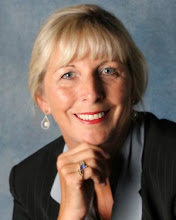
By Sara Wyant
Prior to President Barack Obama’s State of the Union speech this week, we asked a cross section of farm and rural residents what they would like to hear him say. One theme that came across loud and clear: the need for this administration to get busy creating jobs through an aggressive trade strategy.
“Get busy on trade!” was the advice of Kansas Farm Bureau President Steve Baccus. “That means get back to negotiating trade agreements that are USA friendly and work with the administration and Congress to quickly approve the ones waiting out there. Improving global trade will have an immediate impact on our economy.”
President Obama delivered Wednesday night, as part of his State of the Union speech:
“We need to export more of our goods. Because the more products we make and sell to other countries, the more jobs we support right here in America. So tonight, we set a new goal: We will double our exports over the next five years, an increase that will support two million jobs in America. To help meet this goal, we're launching a National Export Initiative that will help farmers and small businesses increase their exports, and reform export controls consistent with national security, he said.
“We have to seek new markets aggressively, just as our competitors are. If America sits on the sidelines while other nations sign trade deals, we will lose the chance to create jobs on our shores. But realizing those benefits also means enforcing those agreements so our trading partners play by the rules. And that's why we'll continue to shape a Doha trade agreement that opens global markets, and why we will strengthen our trade relations in Asia and with key partners like South Korea and Panama and Colombia.”
For more on the President’s speech: http://www.agri-pulse.com/uploaded/Jan2710H2.pdf
Farm groups quickly applauded the President’s focus on trade.
“As leaders of an industry dependent on exports for half its sales, we were thrilled to hear that President Obama plans to give trade a more prominent role in his administration’s economic recovery agenda,” said U.S. Wheat Associates Chair Janice Mattson, a wheat grower from Chester, MT., and National Association of Wheat Growers President Karl Scronce, a wheat grower from Klamath Falls,OR in a joint statement.
The American Farm Bureau Federation also welcomed the news:
“Expanded trade opportunities are vital to America’s farmers and ranchers, and we welcome and support the president’s call to export more of our agricultural goods. We appreciated his support for strengthening trade relations with Asia and with key partners like South Korea, Panama and Colombia. We join President Obama in his stated goal of doubling our exports over the next five years and we look forward to working with the administration on a National Export Initiative that will help farmers and small businesses increase their exports,” said AFBF President Bob Stallman in a statement.
As much as farmers and ranchers are excited about the potential for a new push on trade, the devil is in the details. And for now, there do not appear to be any.
Farm-state senators, like Iowa’s Chuck Grassley, wants action sooner rather than later.
“In his speech, the President said exports are important to job creation, and education is necessary for U.S. workers to compete worldwide,” said Sen. Chuck Grassley. “I agree with those words. Now I’m looking for action. There are two immediate ways to advance these goals. One is for the President to send Congress implementing legislation for the three pending trade agreements that have been ready to go for years. The other is to fund a training program that will help workers get the skills they need for good jobs in the United States.”
So how quickly will the Obama team act? When the New York Times asked the White House for specifics, their editors were told that the Commerce Secretary Gary Locke would provide more details in a speech next week.
For now, all we can say is…..stay tuned.
Agriculture News, Farm Policy, and Rural Policy
#30
Showing posts with label President Obama. Show all posts
Showing posts with label President Obama. Show all posts
Friday, January 29, 2010


Monday, July 20, 2009
Health care reform: Why the rush?
President Barack Obama says Congress needs to tackle health care reform before the August recess, but many members of his own party are asking: “Why the rush?”
The answer is twofold: Most presidents enjoy the typical “honeymoon” with voters during the first six months after their elections and the former Illinois Senator is no exception. His popularity ratings, while slumping in the last couple of months, are still fairly high,
According to an ABC News/Washington Post poll released July 20, 59% of Americans still think Obama is doing a good job, but that’s down from a peak of 72% when he took office.
Moving quickly, therefore, means he can leverage his personal popularity and push otherwise fence-sitting lawmakers into helping him achieve his top priorities. Thus, the need for speed.
But I hope the president also understands another underlying component of this debate. The rest of his term will be the equivalent of a living, governing hell without fixing the rising costs of government-provided health care, primarily Medicare and Medicaid.
The new Congressional Budget Office Director, Doug Elmondorf, explained why health care reform is so important to all of us when he testified before the Senate Budget Committee last week. It read like a version of “Scary Movie,” without the laughs. Here are a couple of excerpts:
“Under current law, the federal budget is on an unsustainable path---meaning that federal debt will continue to grow must faster than the economy over the long run. Although great uncertainty surrounds long-term fiscal projections, rising costs for health care and the aging population will cause federal spending to increase rapidly under any plausible scenario for current law.”
“For decades, spending on the federal government’s major health care programs, Medicare and Medicaid, has been growing faster than the economy. CBO projects that if current laws do not change, federal spending on Medicare and Medicaid combined, will grow from roughly 5% of Gross Domestic Product (GDP) today to almost 10% by 2035 and more than 17% by 2080.”
“Federal spending on Medicare, Medicaid and Social Security will grow relative to the economy both because health care spending per beneficiary is projected to increase and because the population is aging.”
“CBO estimates that in fiscal years 2009 and 2010, the federal government will record its largest budget deficits as a share of GDP since shortly after World War II. As a result of those deficits, federal debt held by the public will soar from 41% of GDP at the end of fiscal year 2008 to 60% at the end of fiscal year 2010.
Had enough? Let’s hope the Chinese and others who hold the majority of our debt, have not.
But here are two more “nuggets” from his testimony that drive home the threats to every farmer, rancher and business owner in the U.S.
"CBO’s long-term budget projections raise fundamental questions about economic sustainability. If outlays grew as projected and revenues did not rise at a corresponding rate, annual deficits would climb and federal debt would grow significantly. Large budget deficits would reduce national savings, leading to more borrowing from abroad and less domestic investment, which in turn, would depress income growth in the U.S. Over time, the accumulation of debt would seriously harm the economy. Alternatively, if spending grew as projected and taxes were raised in tandem, tax rates would have to reach levels never seen in the U.S.”
“Policymakers could mitigate the economic damage from rapidly rising debt by putting the nation on a sustainable fiscal course, which would require some combination of lower spending and higher revenues than the amounts now projected. Making such changes sooner rather than later would lessen the risks that current fiscal policy poses to the economy.”
President Obama has said that this expansion of health care coverage to millions of Americans must not drive up the deficit over the next 10 years. That's a worthy goal, but the health care reform packages emerging from House Committees don’t appear to meet that test. Something this big and this important is going to take more time to get it right.
Agriculture News, Farm Policy, and Rural Policy
# 30
The answer is twofold: Most presidents enjoy the typical “honeymoon” with voters during the first six months after their elections and the former Illinois Senator is no exception. His popularity ratings, while slumping in the last couple of months, are still fairly high,
According to an ABC News/Washington Post poll released July 20, 59% of Americans still think Obama is doing a good job, but that’s down from a peak of 72% when he took office.
Moving quickly, therefore, means he can leverage his personal popularity and push otherwise fence-sitting lawmakers into helping him achieve his top priorities. Thus, the need for speed.
But I hope the president also understands another underlying component of this debate. The rest of his term will be the equivalent of a living, governing hell without fixing the rising costs of government-provided health care, primarily Medicare and Medicaid.
The new Congressional Budget Office Director, Doug Elmondorf, explained why health care reform is so important to all of us when he testified before the Senate Budget Committee last week. It read like a version of “Scary Movie,” without the laughs. Here are a couple of excerpts:
“Under current law, the federal budget is on an unsustainable path---meaning that federal debt will continue to grow must faster than the economy over the long run. Although great uncertainty surrounds long-term fiscal projections, rising costs for health care and the aging population will cause federal spending to increase rapidly under any plausible scenario for current law.”
“For decades, spending on the federal government’s major health care programs, Medicare and Medicaid, has been growing faster than the economy. CBO projects that if current laws do not change, federal spending on Medicare and Medicaid combined, will grow from roughly 5% of Gross Domestic Product (GDP) today to almost 10% by 2035 and more than 17% by 2080.”
“Federal spending on Medicare, Medicaid and Social Security will grow relative to the economy both because health care spending per beneficiary is projected to increase and because the population is aging.”
“CBO estimates that in fiscal years 2009 and 2010, the federal government will record its largest budget deficits as a share of GDP since shortly after World War II. As a result of those deficits, federal debt held by the public will soar from 41% of GDP at the end of fiscal year 2008 to 60% at the end of fiscal year 2010.
Had enough? Let’s hope the Chinese and others who hold the majority of our debt, have not.
But here are two more “nuggets” from his testimony that drive home the threats to every farmer, rancher and business owner in the U.S.
"CBO’s long-term budget projections raise fundamental questions about economic sustainability. If outlays grew as projected and revenues did not rise at a corresponding rate, annual deficits would climb and federal debt would grow significantly. Large budget deficits would reduce national savings, leading to more borrowing from abroad and less domestic investment, which in turn, would depress income growth in the U.S. Over time, the accumulation of debt would seriously harm the economy. Alternatively, if spending grew as projected and taxes were raised in tandem, tax rates would have to reach levels never seen in the U.S.”
“Policymakers could mitigate the economic damage from rapidly rising debt by putting the nation on a sustainable fiscal course, which would require some combination of lower spending and higher revenues than the amounts now projected. Making such changes sooner rather than later would lessen the risks that current fiscal policy poses to the economy.”
President Obama has said that this expansion of health care coverage to millions of Americans must not drive up the deficit over the next 10 years. That's a worthy goal, but the health care reform packages emerging from House Committees don’t appear to meet that test. Something this big and this important is going to take more time to get it right.
Agriculture News, Farm Policy, and Rural Policy
# 30
Thursday, July 2, 2009
Wanted: People to participate in the Obama Administration’s Rural Tour
Maybe it was the short notice. Maybe it was the location. Maybe farmers and other rural folks in northwestern Pennsylvania were just too busy July 1 to turn out for the Vice President of the United States, Agriculture Secretary Tom Vilsack and a swarm of other heavy hitters for the Obama team.
Or maybe, just maybe, they were more interested in hanging on to their own jobs than learning about billions for new broadband investments that will generate jobs a few years from now. After all, the community gained access to broadband over one year ago.
Whatever the reason, the first stop of the Obama Administration’s new “Rural Tour” fell noticeably flat in terms of attendance.
Columnist Salena Zito of the Pittsburgh Tribune-Review reported in her blog that only around 100 or so people showed up just before Biden was ready to talk. The noon-time event was held in the Seneca High School off Route 8 in Wattsburg, PA., population 378. Vice-President Biden and Vilsack were joined by Commerce Secretary Gary Locke, Federal Communications Commission Chair Julius Genakowski and U.S. Rep. Kathy Dahlkemper, (D-Erie).
“The room looked so sparse that about 30 or so chairs were removed by volunteers to give the illusion of a full house,” Zito wrote. “The effect didn't exactly work.”
By the time the event got started, Zito told me that a few more folks showed up. If you counted the volunteers, the staff and the 40-60 schoolchildren in the room, the turnout could have been as high as 180, she said.
One can only wonder what Rep. Dahlkemper, a Blue Dog Democrat who already bucked the Obama Administration to vote against last week’s climate change bill, must be feeling about the low turnout. Ordinarily, the opportunity to bring even one heavy-hitter into your district would be a big deal. In this case, she had four in tow.
Granted, there were a few “bonus” opportunities for Pennsylvania Democrats. Prior to the event, Vilsack met with some dairy farmers to discuss low milk prices, but apparently, they didn’t hear anything that gave them hope for a turnaround anytime soon. And after the swing through Western Pennsylvania, Biden also managed to squeeze in a Pittsburgh fundraiser.
A White House spokesperson says the “Rural Tour” is not politically motivated, but it’s hard to ignore the key players and the map. The tour opened in Dahlkemper’s district, a Democrat who ousted seven-term Republican Rep. Phil English in the 2008 election.
On July 18, Energy Secretary Steven Chu and Agriculture Secretary Tom Vilsack will talk about renewable energy in Ringgold, VA.. Conveniently, Ringgold is part of a southern Virginia district represented by Rep. Tom Perriello, a Democrat who narrowly defeated Republican incumbent Virgil H. Goode Jr. last year.
My guess is that the White House will do a better job working the phones and generating attendance for future stops on the Rural Tour. If not, some members of the advance team may also be looking for new jobs.
I will be especially interested in the turnout on August 12th, when not one, but 5 cabinet members travel to Bethel, Alaska (population 6,356). The town is located 340 miles west of Anchorage and only accessible by air and river. How's that for a "captive" audience?
Secretaries Tom Vilsack Steven Chu, Shaun Donovan, Arne Duncan, and Ken Salazar are scheduled to discuss rural infrastructure, green jobs and a new energy economy, as well as climate change on that day. The topics are good and I hope the crowd is, too. Bring your airplane or boat and you may have a chance to visit, one on one.
Agriculture News, Farm Policy, and Rural Policy
#30
Or maybe, just maybe, they were more interested in hanging on to their own jobs than learning about billions for new broadband investments that will generate jobs a few years from now. After all, the community gained access to broadband over one year ago.
Whatever the reason, the first stop of the Obama Administration’s new “Rural Tour” fell noticeably flat in terms of attendance.
Columnist Salena Zito of the Pittsburgh Tribune-Review reported in her blog that only around 100 or so people showed up just before Biden was ready to talk. The noon-time event was held in the Seneca High School off Route 8 in Wattsburg, PA., population 378. Vice-President Biden and Vilsack were joined by Commerce Secretary Gary Locke, Federal Communications Commission Chair Julius Genakowski and U.S. Rep. Kathy Dahlkemper, (D-Erie).
“The room looked so sparse that about 30 or so chairs were removed by volunteers to give the illusion of a full house,” Zito wrote. “The effect didn't exactly work.”
By the time the event got started, Zito told me that a few more folks showed up. If you counted the volunteers, the staff and the 40-60 schoolchildren in the room, the turnout could have been as high as 180, she said.
One can only wonder what Rep. Dahlkemper, a Blue Dog Democrat who already bucked the Obama Administration to vote against last week’s climate change bill, must be feeling about the low turnout. Ordinarily, the opportunity to bring even one heavy-hitter into your district would be a big deal. In this case, she had four in tow.
Granted, there were a few “bonus” opportunities for Pennsylvania Democrats. Prior to the event, Vilsack met with some dairy farmers to discuss low milk prices, but apparently, they didn’t hear anything that gave them hope for a turnaround anytime soon. And after the swing through Western Pennsylvania, Biden also managed to squeeze in a Pittsburgh fundraiser.
A White House spokesperson says the “Rural Tour” is not politically motivated, but it’s hard to ignore the key players and the map. The tour opened in Dahlkemper’s district, a Democrat who ousted seven-term Republican Rep. Phil English in the 2008 election.
On July 18, Energy Secretary Steven Chu and Agriculture Secretary Tom Vilsack will talk about renewable energy in Ringgold, VA.. Conveniently, Ringgold is part of a southern Virginia district represented by Rep. Tom Perriello, a Democrat who narrowly defeated Republican incumbent Virgil H. Goode Jr. last year.
My guess is that the White House will do a better job working the phones and generating attendance for future stops on the Rural Tour. If not, some members of the advance team may also be looking for new jobs.
I will be especially interested in the turnout on August 12th, when not one, but 5 cabinet members travel to Bethel, Alaska (population 6,356). The town is located 340 miles west of Anchorage and only accessible by air and river. How's that for a "captive" audience?
Secretaries Tom Vilsack Steven Chu, Shaun Donovan, Arne Duncan, and Ken Salazar are scheduled to discuss rural infrastructure, green jobs and a new energy economy, as well as climate change on that day. The topics are good and I hope the crowd is, too. Bring your airplane or boat and you may have a chance to visit, one on one.
Agriculture News, Farm Policy, and Rural Policy
#30
Subscribe to:
Posts (Atom)